
Learning how to organize hand tools can make even a small home workshop faster and easier to use. In many garages and workspaces, the problem is not a lack of tools — it is finding the right screwdriver, wrench, pliers, or measuring tape when you actually need it.
The most effective hand tool storage system usually does not require putting every tool in the same place. Instead, separate the tools you reach for constantly from specialty tools you only use occasionally. Your everyday set should stay visible, organized, and easy to carry, while larger or less frequently used tools can remain in a toolbox, cabinet, drawer, or on a pegboard.
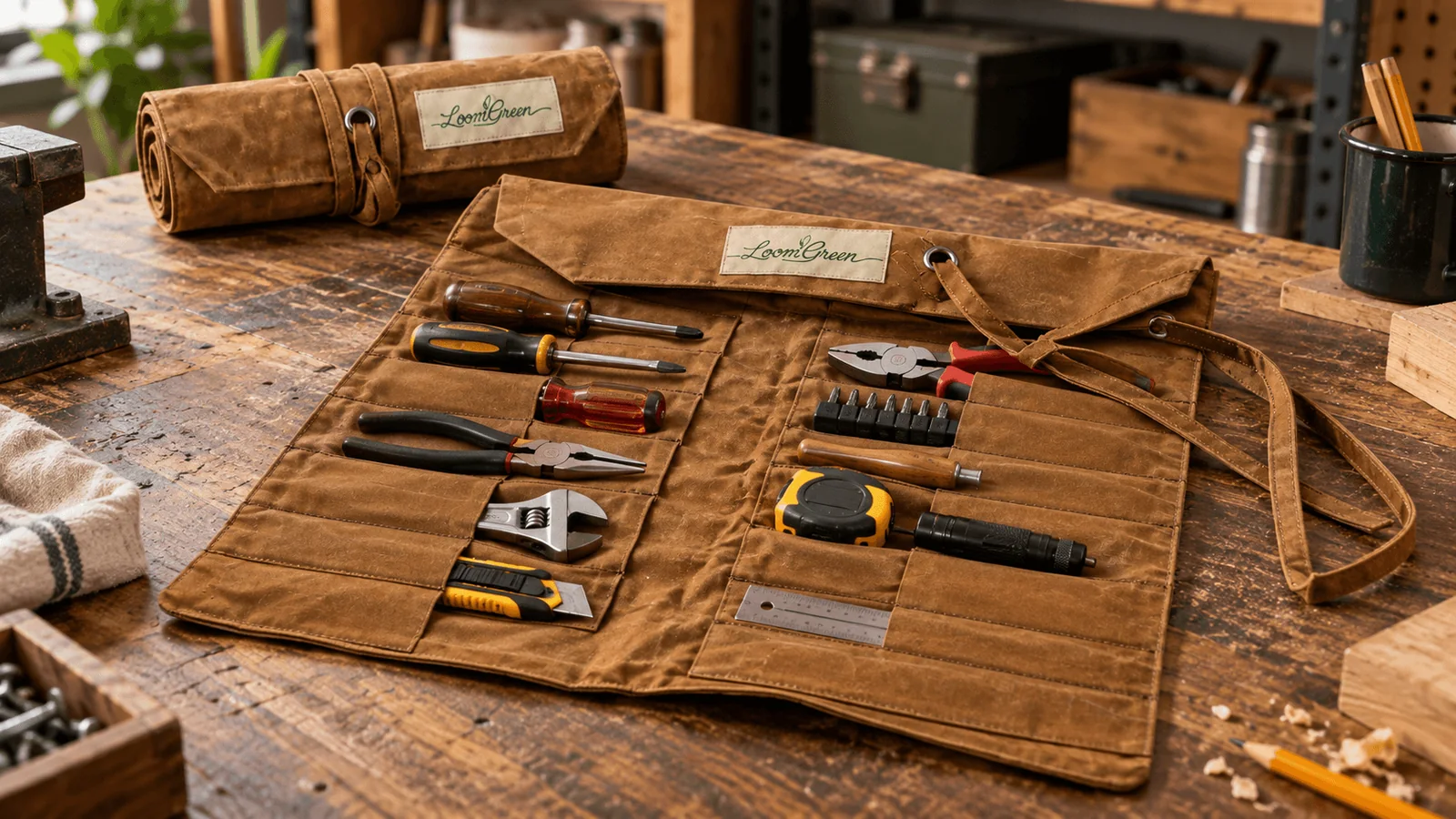
A waxed canvas tool roll is particularly useful for that everyday set because it gives each tool a defined position while keeping the entire collection portable.
Why Hand Tool Organization Matters in a Home Workshop
A well-organized workshop is not simply about making the space look tidy. The purpose is to reduce the time spent searching for tools and make it obvious when something has not been returned to its proper place.
When hand tools are scattered between drawers, shelves and toolboxes, even a simple repair can involve opening several containers before finding the right tool. A better system gives frequently used tools a permanent home.
For most home workshops, it helps to divide storage into three levels:
- Everyday tools: screwdrivers, pliers, adjustable wrenches, utility knives and measuring tools that you use regularly.
- Workshop tools: larger wrench sets, socket sets, hammers, clamps and other tools that need more storage space.
- Specialty tools: tools used only for specific repairs or occasional projects.
This approach keeps the tools you need most within easy reach without trying to force your entire workshop into one storage solution.
Tool Roll vs. Toolbox vs. Pegboard
There is no single best way to organize every hand tool. Tool rolls, toolboxes and pegboards solve different problems.
A toolbox is useful when you need to store a larger number of tools in one protected location. Drawers and compartments work especially well for socket sets, hardware and heavier tools.
A pegboard provides excellent visual access to tools that stay in the workshop. It is particularly useful when you have enough wall space and want to see your tools at a glance.
A tool roll works differently. It is best suited to a smaller core set of tools that you use frequently and may want to move between your workbench, garage, vehicle or another work area.
Rather than choosing one system, a practical home workshop can use all three.
What Hand Tools Should Go in a Tool Roll?
The easiest mistake is trying to fit every tool you own into your portable organizer. Instead, build your tool roll around the jobs you actually perform regularly.
A practical everyday set might include:
- Phillips screwdrivers in two or three commonly used sizes
- Flathead screwdrivers
- Needle-nose pliers
- Combination or standard pliers
- A small adjustable wrench
- Utility knife
- Tape measure
- Small file
- Hex keys or a compact bit holder
- Electrical tape or a few cable ties
- Other small tools specific to the work you regularly do
The exact combination is less important than choosing tools you genuinely reach for often.
Large socket sets, power tools, bulky hammers and rarely used specialty tools will generally be better stored elsewhere.
How to Organize Hand Tools Step by Step
1. Take Every Frequently Used Tool Out First
Start by collecting the tools you currently use from drawers, shelves, toolboxes and work surfaces. Do not organize them yet.
Seeing everything together makes duplicate tools and rarely used items much easier to identify.
2. Separate Your Core Tool Set
Ask one simple question for each tool:
Do I normally use this tool at least once every few projects?
If the answer is yes, it may belong in your everyday organizer. If you only need the tool for one particular type of repair, leave it in your main workshop storage.
This is what keeps a portable tool roll useful rather than overloaded.
3. Inspect Tools Before Storing Them
Organization is also a good opportunity to inspect the condition of your hand tools.
Look for damaged handles, worn cutting edges, loose components or adjustable wrench jaws that no longer operate properly. Tools should also be clean and dry before being placed into longer-term storage.
Good storage should support safe tool use rather than hide damaged equipment at the bottom of a drawer.
4. Organize by Frequency of Use
One of the most practical ways to organize hand tools is by reach frequency rather than simply by category.
Put the tools you use most frequently where they are easiest to remove. Tools you use less often can occupy the remaining pockets.
For example, if your projects regularly involve screwdrivers and pliers, those should occupy the most accessible positions rather than being placed wherever they happen to fit.
5. Keep Similar Tools Together
Frequency should determine the general position, but similar tools should still be grouped together.
Keep screwdrivers next to other screwdrivers, pliers near other gripping tools and measuring tools in their own section. This makes it easier to select the correct size or type without checking every pocket.
6. Give Every Tool a Permanent Position
The biggest advantage of a structured organizer is not simply the number of pockets. It is creating a fixed location for each tool.
Once your layout works, keep it consistent.
You will gradually remember the position of each tool, and an empty pocket immediately tells you that something has not been returned.
Making a 14-Pocket Tool Roll Work for Your Workshop
The Loom Green Waxed Canvas Tool Roll Organizer uses fourteen stitched pockets in mixed widths, allowing different types of hand tools to be stored within the same roll.
Instead of assigning one pocket randomly to each item, plan the layout before filling it.
A simple arrangement could look like this:
- Section 1: frequently used screwdrivers
- Section 2: pliers and gripping tools
- Section 3: adjustable wrench or compact spanners
- Section 4: utility knife and measuring tools
- Section 5: small workshop accessories
Mixed pocket widths are useful because a screwdriver, wrench and pair of pliers do not require identical storage space.
The goal is not to fill all fourteen pockets simply because they are available. Leave space if necessary. An organized tool roll should remain easy to open, close and carry.
Create Zones in Your Home Workshop
Once your everyday hand tools are organized, apply the same principle to the rest of the workshop.
Zone 1: Immediate-Access Tools
This is your core set: the tools you reach for constantly. Keep them in your tool roll or directly beside your primary workbench.
Zone 2: Regular Workshop Tools
Store larger hand tools, socket sets, clamps and other frequently used equipment in drawers, cabinets, wall storage or a traditional toolbox.
Zone 3: Specialty and Occasional Tools
Tools used only for specific projects can be stored farther from the main work area. Clearly labelled drawers or containers make these easier to find when required.
Organizing by frequency keeps valuable workbench space available for the tools that actually deserve to be there.
How a Tool Roll Improves Portability
Workshop organization changes when tools need to leave the workshop.
A loose selection of screwdrivers and pliers thrown into a bag can quickly become difficult to sort. A tool roll keeps the same arrangement whether it is sitting on your workbench or being transported elsewhere.
That makes a portable organizer useful for household repairs, garage work, vehicle tool kits, maintenance jobs and other situations where a small selection of hand tools needs to travel together.
When opened, the tools remain visible. When the job is finished, they can be returned to their positions and the organizer rolled back up.
How to Care for a Waxed Canvas Tool Roll
Waxed canvas is designed to handle regular use, but the waxed finish requires different care from an ordinary washable cotton bag.
- Remove loose dust and dirt before cleaning.
- Wipe the canvas with a dry or slightly damp cloth when required.
- Avoid machine washing or soaking waxed canvas.
- Allow the organizer to air dry completely if it becomes wet.
- Re-wax the canvas when necessary if the surface begins to feel dry or its light moisture resistance decreases.
- Make sure tools are dry before storing them for extended periods.
Proper care helps preserve both the fabric and its waxed finish.
Common Hand Tool Organization Mistakes
Trying to store everything together: A portable organizer becomes less useful when it is overloaded with tools you rarely need.
Organizing only by tool type: Categories are useful, but accessibility should also reflect how often each tool is actually used.
Using random pockets every time: A fixed layout makes it easier to find tools and notice missing ones.
Putting tools away wet or dirty: Clean and dry tools before longer-term storage.
Ignoring the rest of the workshop: A tool roll solves the everyday-tool problem. You still need sensible storage for larger and less frequently used equipment.
Frequently Asked Questions About Organizing Hand Tools
What is the best way to organize hand tools?
The best system usually combines different types of storage. Keep frequently used tools in an easily accessible organizer, larger tools in a toolbox or cabinet, and workshop tools that benefit from visibility on wall storage or a pegboard.
What tools should be kept in a tool roll?
A tool roll works best for a compact set of regularly used hand tools such as screwdrivers, pliers, adjustable wrenches, a utility knife, measuring tape, files and other small workshop essentials.
Is a tool roll better than a toolbox?
They serve different purposes. A toolbox offers greater overall storage capacity, while a tool roll can make a smaller set of frequently used tools easier to see, organize and transport. Many workshops benefit from using both.
How do you prevent hand tools from getting lost?
Give each tool a permanent storage position and return it immediately after use. Tool rolls, pegboards and fitted toolbox drawers make missing tools easier to notice because an empty position is visible.
Can waxed canvas be machine washed?
Waxed canvas generally should not be machine washed or soaked because aggressive washing can affect the waxed finish. For the Loom Green tool roll, wipe the canvas with a damp cloth and re-wax when needed.
Build a Hand Tool System You Will Actually Maintain
The best way to organize hand tools is not necessarily to buy more storage. It is to decide which tools need immediate access, give each one a permanent position, and create a simple habit of returning tools after every job.
A tool roll will not replace your entire toolbox, pegboard or workshop cabinet — nor should it. Its job is much more specific: keep the small group of hand tools you use constantly organized, visible and ready to move.
The Loom Green Waxed Canvas Tool Roll Organizer is made from 7 oz waxed canvas with 14 stitched pockets and opens to approximately 17 × 12 inches. It is designed as a compact way to organize and transport an everyday selection of hand tools for the workshop, garage, vehicle or job site.
Explore more practical storage and organization products in the Loom Green product collection.
Build your core tool set, give every tool its place, and spend less time searching for the tool you already own.