
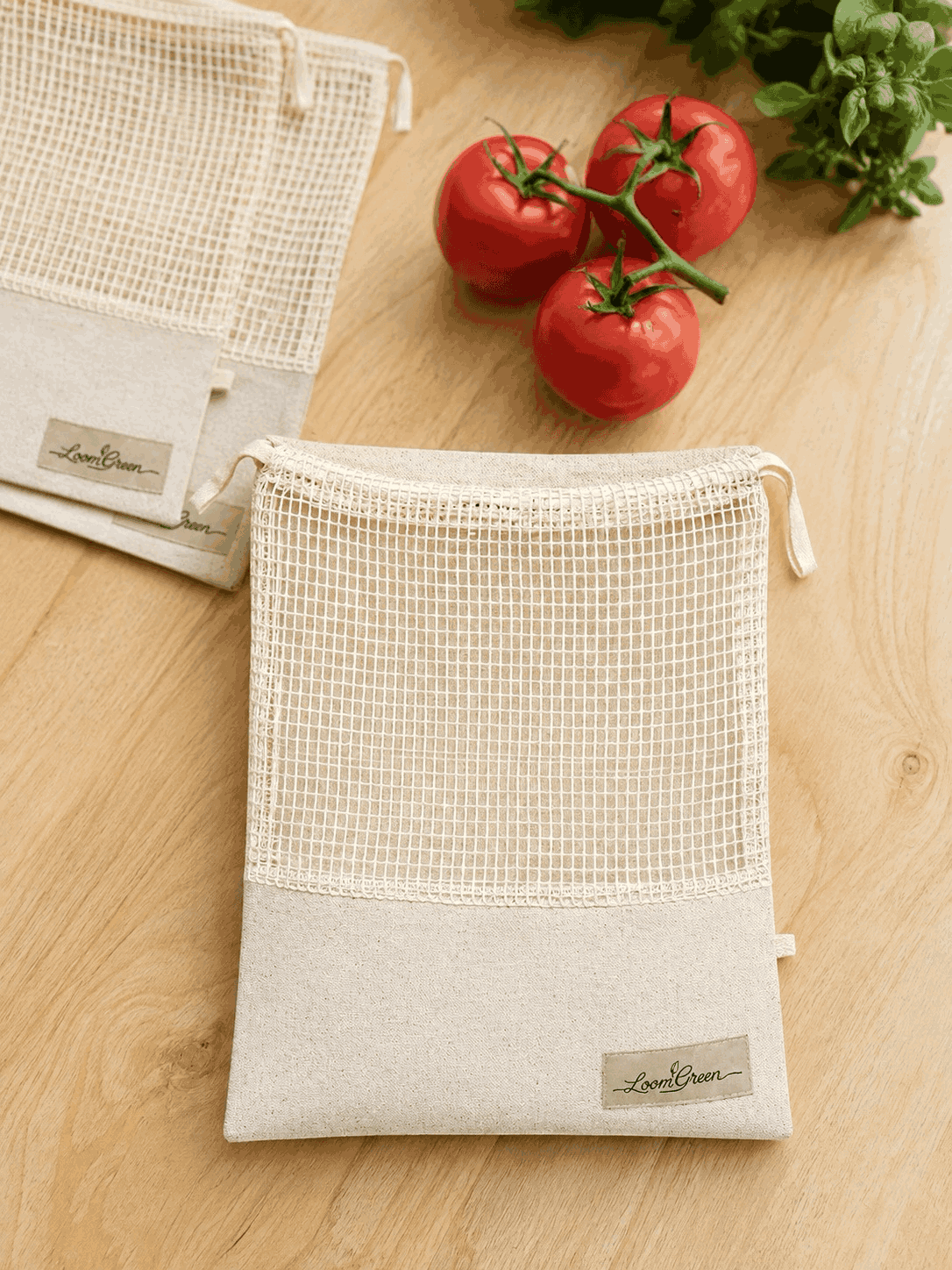
A well-organized pantry isn’t only about having more shelves or buying matching containers. The real challenge is creating a storage system that makes everyday items easy to see, reach, and put back where they belong.
Reusable mesh bags can be a simple way to organize produce, packaged foods, snacks, and smaller pantry items without filling every shelf with bulky containers.
Because mesh bags are lightweight, flexible, and easy to store when empty, they can work particularly well in pantries where space is limited. They can also help reduce the number of disposable bags used for grocery shopping and everyday food organization.
The key is knowing what belongs in a mesh bag — and what doesn’t.
Why Use Reusable Mesh Bags for Pantry Organization?
Traditional plastic bins and rigid storage containers are useful, but they are not necessary for everything in your pantry.
Reusable mesh bags offer several practical advantages.
1. You Can See What’s Inside
The open mesh construction makes it easy to identify many foods and household items without opening the bag.
Instead of searching through several opaque containers, you can quickly see whether a bag contains onions, packaged snacks, fruit, bread rolls, or other pantry items.
2. They Take Up Less Space
Rigid containers occupy the same amount of shelf space whether they are full or empty.
Reusable mesh bags can collapse and fold when they aren’t being used, making them particularly useful for smaller kitchens and pantries.
3. They’re Easy to Move
A drawstring bag allows you to group related items together and move the entire group when needed.
For example, you could keep baking packets in one bag, individually packaged snacks in another, and suitable produce in a larger bag.
4. They Can Replace Some Disposable Bags
Reusable cotton mesh bags can be used repeatedly for grocery shopping, produce carrying, pantry organization, and other household storage.
That makes them a practical alternative to repeatedly using disposable produce or shopping bags.
What Should You Store in Reusable Mesh Bags?
Mesh bags work best when the contents benefit from visibility, flexibility, or airflow.
Good options include:
- Onions
- Garlic
- Apples and citrus fruit
- Bread rolls
- Packaged pasta
- Packaged rice and grains
- Snack packets
- Granola bars
- Nuts or dried fruit that are already packaged
- Tea packets
- Coffee packets
- Baking supplies in their original packaging
- Reusable food wraps
- Small kitchen accessories
For onions, garlic, potatoes, and similar produce, always follow the recommended storage conditions for that particular food. Some produce should be stored in a cool, dry, dark, and ventilated area rather than exposed to light.
What Should Not Be Stored Directly in Mesh Bags?
Reusable mesh bags are not a replacement for airtight food storage containers.
Avoid placing loose items such as these directly inside a mesh bag:
- Flour
- Sugar
- Loose rice
- Fine grains
- Ground coffee
- Loose spices
- Powdered ingredients
- Foods that need protection from moisture or pantry pests
For these products, an airtight food-safe container is generally the better option.
You can, however, use a reusable mesh bag to organize several sealed packages of these products together.
How to Organize a Pantry with Reusable Mesh Bags
The easiest way to organize your pantry is to create categories before deciding which bag to use.
Step 1: Empty and Sort Your Pantry
Start by removing items from the shelves and grouping similar products together.
Typical categories might include:
- Produce
- Snacks
- Breakfast foods
- Baking supplies
- Pasta and grains
- Tea and coffee
- Lunchbox items
- Household or kitchen accessories
This immediately shows you which items need rigid containers and which can be organized with reusable mesh bags.
Step 2: Match the Bag Size to the Contents
A multi-size set gives you more flexibility than using identical bags for everything.
With Loom Green’s XL, L, M, and S sizes, you can assign different bags to different types of pantry storage.
XL — Larger Pantry Items
Use the largest bag for bulkier items such as:
- Larger produce
- Multiple packaged food items
- Bread or rolls
- Large snack packets
- Grocery-market produce
L — Everyday Produce and Packaged Foods
A large bag works well for:
- Onions
- Apples
- Citrus fruit
- Packaged pasta
- Family-size snack packets
M — Snacks and Smaller Pantry Categories
Medium bags can help organize:
- Granola bars
- Dried-fruit packets
- Tea packets
- Individually packaged snacks
- Lunchbox supplies
S — Small Pantry Items
Use smaller bags to keep together items that otherwise get lost at the back of a shelf, such as:
- Small seasoning packets
- Tea sachets
- Small snack packets
- Baking accessories
- Reusable kitchen accessories
Create Pantry Zones Instead of Random Storage
One of the biggest mistakes in pantry organization is storing items wherever there happens to be free space.
Instead, create defined zones.
Breakfast Zone: oatmeal packets, tea, coffee, cereal accessories
Snack Zone: granola bars, dried-fruit packets, crackers, lunchbox snacks
Produce Zone: onions, garlic, fruit, or other appropriately stored produce
Cooking Zone: packaged pasta, rice, grains, and other cooking ingredients
Each reusable mesh bag then becomes part of a category rather than simply another container.
This makes it easier to maintain the organization after the initial cleanup.
Use Labels When Needed
One benefit of mesh is that you can usually see what’s inside, so labeling every bag isn’t necessary.
However, labels can still be helpful when you have similar-looking products or want to manage pantry rotation.
A small reusable tag can identify:
- Product category
- Purchase date
- Best-before date
- “Use first” items
This is particularly useful when following a first in, first out approach to pantry organization.
Keep Heavier Items Lower
Where you place each bag matters as much as what you put inside it.
Heavier bags should generally stay on lower pantry shelves where they are easier and safer to lift.
Lighter bags containing tea, snacks, or small packaged items can be placed at eye level.
If your pantry includes hooks or suitable hanging storage, drawstring bags can also be hung to make better use of vertical space.
How to Care for Cotton Reusable Mesh Bags
Proper care helps reusable mesh bags maintain their shape and remain useful for longer.
For Loom Green’s cotton mesh bags, a simple care routine is usually enough:
- Empty crumbs and food residue after use.
- Wash when soiled or after carrying produce that leaves dirt or residue.
- Use mild soap.
- Avoid harsh cleaning chemicals.
- Reshape the bag after washing.
- Allow it to air dry completely before storing or reusing.
There is no need to wash a pantry bag after an arbitrary number of uses. Washing frequency should depend on what the bag carried and whether it became dirty.
Reusable Mesh Bags vs. Plastic Storage Containers
It isn’t necessary to choose one storage system for the entire pantry.
The most practical pantry often uses both reusable mesh bags and airtight containers.
Use airtight containers for:
- Flour
- Sugar
- Loose grains
- Cereals
- Foods sensitive to moisture
- Foods requiring protection from pests
Use reusable mesh bags for:
- Appropriate produce
- Packaged foods
- Snacks
- Grocery organization
- Lightweight pantry categories
- Items that benefit from flexible storage
The goal isn’t to eliminate every container in your kitchen. It’s to use the right type of storage for each product.
A Simpler Way to Keep Your Pantry Organized
A pantry organization system only works if it’s easy enough to maintain.
Reusable mesh bags provide a flexible option for items that don’t require airtight storage. They make contents easier to see, fold away when they aren’t needed, and can move between grocery shopping and household storage.
Instead of filling every shelf with another rigid container, combine airtight storage where it is necessary with flexible bags where it isn’t.
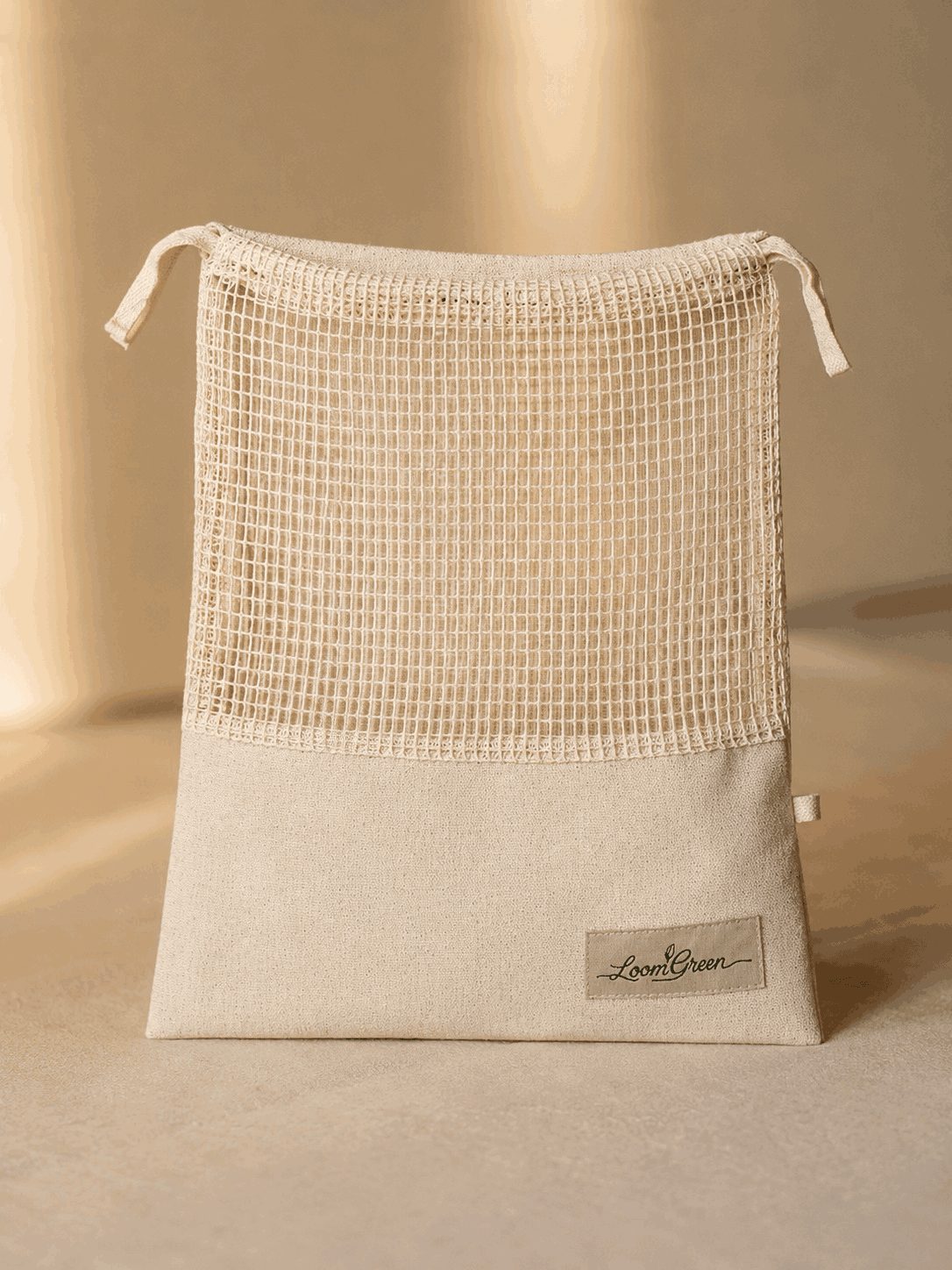
Loom Green’s Reusable Drawstring Mesh Bags include XL, L, M, and S sizes, with a breathable cotton mesh upper and sturdy canvas base designed for repeated everyday use.
Whether you’re organizing pantry shelves, carrying produce from the market, or keeping smaller kitchen items together, a multi-size set gives you several ways to use the same bags throughout your home.
Frequently Asked Questions About Reusable Mesh Bags
What can reusable mesh bags be used for?
Reusable mesh bags can be used for grocery shopping, produce, packaged pantry foods, snack organization, kitchen accessories, and general household storage. What you store in them should depend on whether the item requires airtight or moisture-resistant storage.
Can you store vegetables in reusable mesh bags?
Some vegetables can be stored in breathable bags, but storage requirements vary by produce. Items such as onions and garlic generally benefit from ventilation, while other produce may require refrigeration, darkness, or different humidity conditions.
Can you store flour or rice in mesh bags?
Loose flour should not be stored directly in a mesh bag. Loose rice and grains are also generally better protected in sealed food-safe containers. Mesh bags can instead be used to organize unopened or sealed packages.
Are reusable mesh bags washable?
Cotton reusable mesh bags can generally be washed when they become dirty. Follow the care instructions provided with the product, use mild cleaning products, and allow the bags to dry completely before storing them.
Are mesh bags useful outside the pantry?
Yes. Reusable mesh bags can also be used for grocery shopping, produce carrying, travel organization, kitchen accessories, craft supplies, and other lightweight household storage.